Rooms that never quite warm up
Undersized radiators or pipework starved of flow leave bedrooms and extensions permanently cooler than the rest of the house, however long the heating runs.
Emergency Call-Outs, Out Of Hours Too, no call-out fee
A wet central heating system sized room by room, piped properly and commissioned to manufacturer figures, fitted by the same Gas Safe registered engineer who surveys and quotes it, for a fixed price agreed before work starts.
Free survey and quote, no call-out fee ever, fixed price agreed in writing before any work begins.
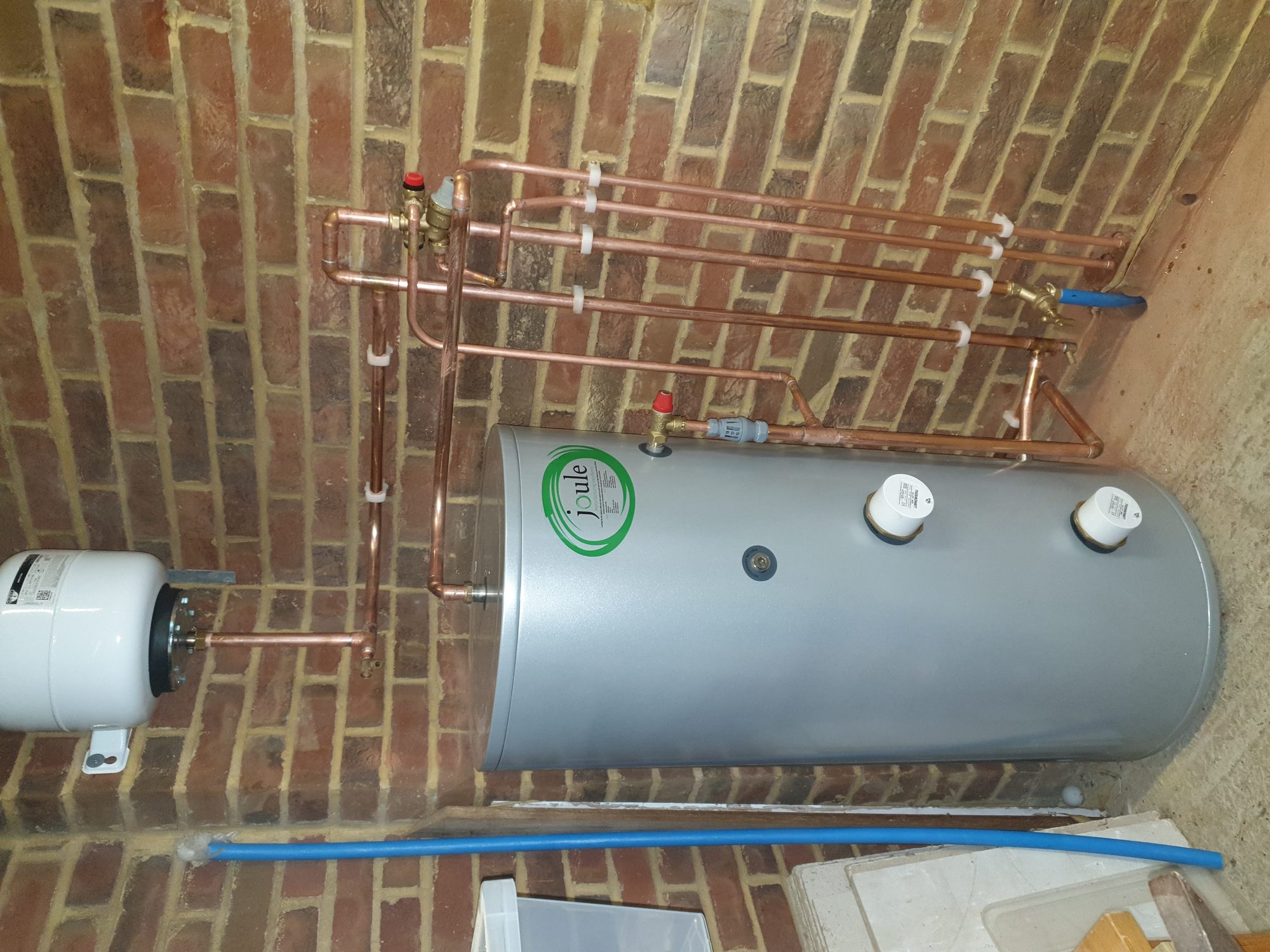
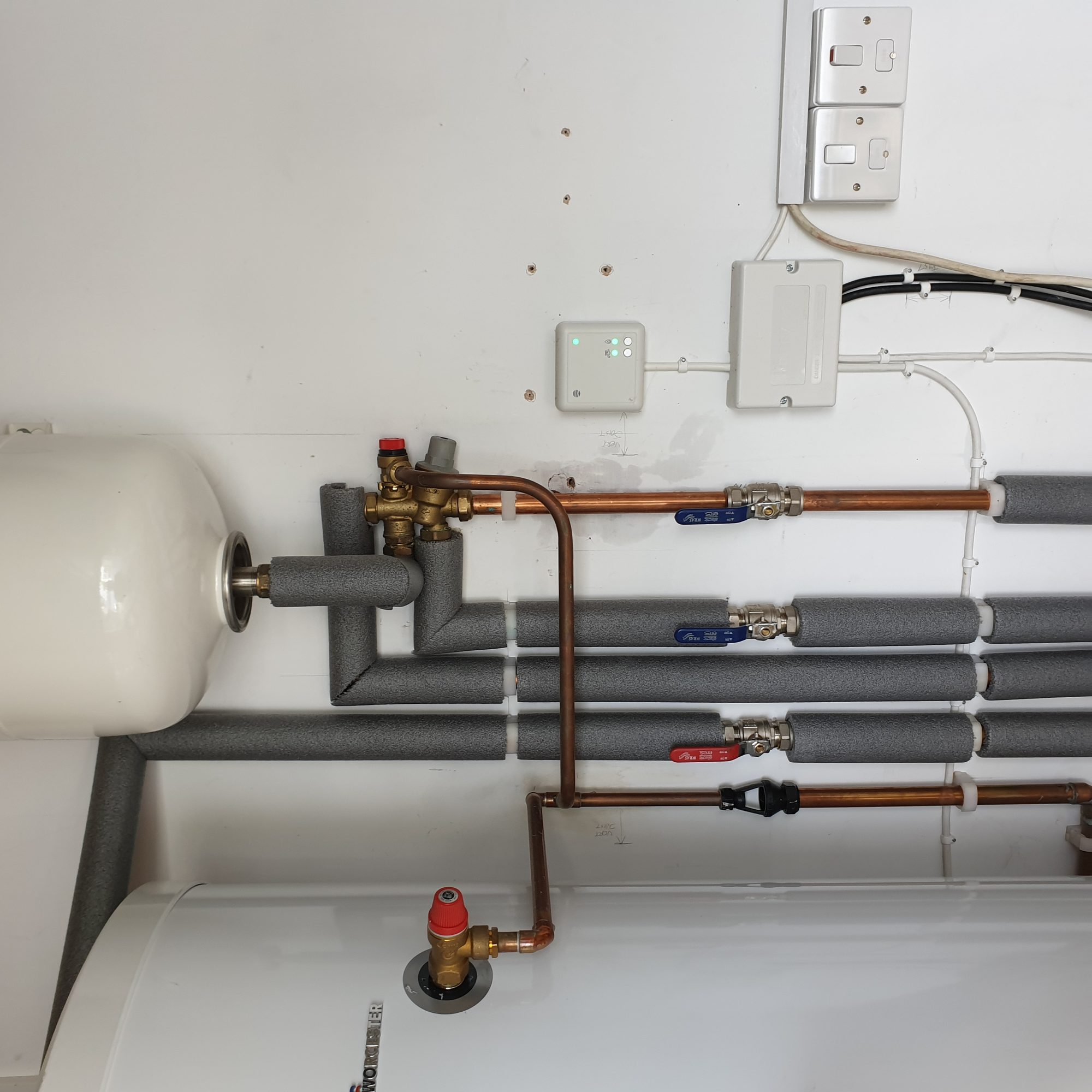
A central heating installation is bigger than a boiler swap. It means designing a wet heating system for the whole property, boiler, pipework, radiators, controls and, where needed, a hot water cylinder, so every room reaches the temperature it needs without the boiler working harder than it should. That starts with a room-by-room heat loss calculation, not a guess based on the old radiators already on the walls.
I see this work most often in three situations: a property that has never had gas central heating and is moving off storage heaters or an old oil system; an extension or loft conversion that needs new pipework and radiators run into it; and a full rip-out where old microbore pipework, undersized radiators and a tired boiler are all replaced together. Each is priced and planned differently, but the process is the same: survey, design, fixed quote, then a clean, methodical install.
Because I work solo, the same engineer who calculates the heat loss, specifies the radiators and quotes the job is the one running pipe under your floors and commissioning the boiler at the end. On multi-day jobs I use dust sheets and floor protection as standard, and I tell you at the quote stage exactly how many days the work will take and what state each room will be left in overnight.
Homes in Epsom, Reigate, Banstead, Cobham and South West London converting from storage heaters, oil or an ageing gravity system to modern gas central heating, plus extensions, conversions and self-builds needing a system from scratch.
When there is no wet heating system in the property at all, when an extension or new rooms have no radiators or pipework run to them, or when the existing pipework and radiators are so undersized or corroded that patching them is no longer worthwhile.
Undersized pipework and wrongly specified radiators are the single biggest reason central heating systems underperform. Correct pipe sizing, radiator output calculations and gas supply capacity all need checking together, and the gas connection itself is legally restricted to a Gas Safe registered engineer.
A heating system that has been pieced together over the years, or installed cheaply without proper calculations, rarely fails outright: it just underperforms quietly, room after room, for as long as you live with it.
Undersized radiators or pipework starved of flow leave bedrooms and extensions permanently cooler than the rest of the house, however long the heating runs.
A system with poor pipe sizing or an unbalanced circuit makes the boiler short-cycle or run at a higher flow temperature than necessary, which shows up directly on the gas bill.
Adding rooms or radiators onto an already-stretched system without recalculating pipe sizes just moves the shortfall elsewhere in the house.
A boiler paired with a system it was never sized for tends to cycle more than it should, putting extra wear on the pump and heat exchanger years before it needs replacing.
I assess the property room by room, insulation, glazing, floor area and current radiators, to calculate the heat output each space actually needs, then check gas supply capacity and boiler position options. The survey is free.
I specify the boiler, pipe sizing, radiator sizes and control strategy, and send a written fixed price covering appliance, materials, labour and making good.
Pipework is run to size, properly clipped and supported, with routes agreed to minimise disruption to floors, walls and decoration.
Radiators are hung and connected, the boiler is installed and commissioned, and thermostats, programmers and thermostatic radiator valves are fitted so each area of the house can be controlled independently.
The whole system is cleaned, dosed with inhibitor and commissioned, gas rate, pressures and flue gas analysis checked and recorded, before controls are set up with you and paperwork handed over.
Radiators sized to each room's actual heat loss mean bedrooms, extensions and living areas all reach temperature reliably, not just the rooms nearest the boiler.
Correct pipe sizing and a balanced system let the boiler run efficiently at a sensible flow temperature instead of working harder to compensate for a poor design.
Thermostatic radiator valves and zoning let you heat the rooms you use without paying to heat the ones you do not.
Correctly sized pipework, inhibitor dosing and filtration reduce the wear that causes early pump, radiator and boiler failures.
Full installations are quoted as a fixed price covering the whole scope, agreed before I start, with a free survey and no call-out fee.
The person who designs the system fits it and commissions it, so decisions made at survey stage are carried through accurately on site.
The right specification depends on the property type, how many bathrooms are in use, and whether pipework is being run into existing fabric or a stripped-back shell. Here is how I approach the variations I see across Surrey and South West London.
Properties moving off storage heaters, electric heating or an oil boiler need a gas supply assessed, a boiler position agreed and an entirely new pipework layout run, usually more disruptive than a like-for-like swap but with the advantage of designing the system correctly from the outset.
Full replacements of an old gravity or microbore system let me correct historic undersizing at the same time, rather than perpetuating whatever compromises were made decades ago.
Pipe sizing is calculated against the flow rate each radiator or zone needs, not fitted at whatever diameter happens to be easiest to run. Radiators are specified by output (in watts) against the room's heat loss, not by the size of the radiator being replaced.
Once pipework and radiators are in, the system is flushed, dosed and the boiler commissioned to manufacturer figures: gas rate, pressures and combustion all checked and recorded on the benchmark log.
You get the controls talked through in person, the paperwork for the boiler warranty, and my direct number if anything needs balancing or adjusting once you have lived with the system for a few weeks.
Most installations are in houses and flats across Epsom, Reigate, Banstead, Cobham, Walton-on-Thames, Dorking, Worcester Park and South West London, including landlord instructions where timing needs to fit around tenants.
Small commercial premises are taken on where the scope sits within my Gas Safe registration; I will say plainly if a project needs specialist commercial qualifications beyond that.
It depends on the number of radiators, pipe runs and whether a hot water cylinder is involved, so I always survey and calculate heat loss before quoting. You get a written fixed price covering the whole job, the survey is free, and there is no call-out fee.
A full system in an average three-bedroom house typically runs three to five days depending on pipe routes and how much making good is needed. I confirm the expected timeline in the written quote so you can plan around it.
Yes, provided there is a suitable gas supply or one can be run in. I check supply capacity, meter position and boiler location options at survey stage as part of the design.
During a multi-day install there will be periods without heating while pipework is run, particularly early in the job. I sequence the work to reconnect radiators as soon as possible and will tell you upfront what to expect each day.
I calculate heat loss room by room based on floor area, insulation and glazing, then specify radiator output in watts to match. This is why systems I design heat evenly, rather than leaving certain rooms permanently cold.
Up to 10 years parts and labour on Vaillant and Worcester Bosch boilers, subject to the manufacturer's terms and annual servicing, plus 1 year on my workmanship and 1 year on the materials and parts I supply.
Correctly sized pipework and radiators, protected with inhibitor and a filter and serviced annually, should give many years of reliable running. Undersizing and skipped servicing are what shorten a system's life, so both are covered in every install I design.
Yes, this is a common project. I extend the existing system or design a new zone for the extra space, sizing pipework and radiators for the added load rather than simply tapping into the nearest existing pipe.
Yes. Standard call-outs are attended within 24 hours where possible, and genuine emergencies, no heating in freezing weather, for example, are usually same day, often within a couple of hours.
Epsom, Reigate, Banstead, Cobham, Walton-on-Thames, Dorking, Worcester Park, the wider Surrey area and South West London, working out from my base in Reigate.
Central Heating Installation is carried out across Epsom, Reigate, Banstead, Cobham, Walton-on-Thames, Dorking, Worcester Park, Surrey, South West London and the surrounding towns. See the full areas covered or request a free quote.
Tell me about the property and where the cold spots are, and I will survey it, calculate heat loss room by room and send a written fixed price. No call-out fee, free quotes, and up to a 10-year manufacturer warranty on the boiler.